

5 Marketing Mistakes Small Businesses Make (and How to Fix Them)
You’ve poured time and money into marketing, but your phone still isn’t ringing off the hook. It’s frustrating and exhausting – and you’re not alone. Every entrepreneur hits these stumbling blocks. I’ve seen countless examples of marketing mistakes small business owners make, and believe me, they’re fixable.
Most small businesses fall into the same traps: skipping the basics, blowing money on random tactics, or just feeling overwhelmed. These are not just minor errors – they’re the small business marketing pitfalls that can sink any venture. But none of those errors are your fault. You probably learned by doing or from free advice online. Now it’s time to get serious and fix those common marketing errors.
In this article, we’ll break down 5 marketing mistakes small businesses make and show you exactly how to fix marketing mistakes. I’m talking straight: no bull, just practical steps you can take today. Ready to stop wasting money and start seeing real results? Let’s get to work – by the end, you’ll know exactly how to fix marketing mistakes that are holding your business back.
By the way, If you want a broader view of the landscape, I’ve also put together a complete 2026 guide to digital tools covering AI, CRM, productivity platforms, automation tools and more.
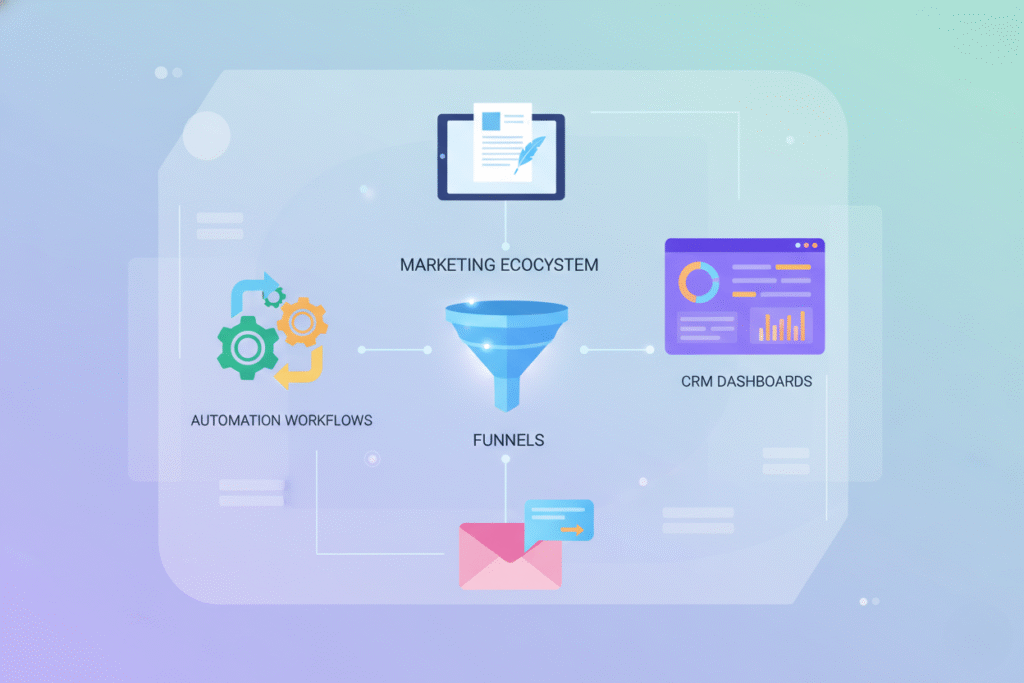
Mistake #1 – No Clear Funnel or Lead Capture: Top marketing mistakes small business entrepreneurs make
A lot of small business owners treat their website like a business card. They put up a site or a Facebook page, then wait for customers to come. In reality, without a clear funnel or lead capture, you’re leaving money on the table. People visit your page, like what they see, but you’ve given them no reason to stay in touch. That’s one of the worst marketing mistakes small business owners make.
It’s like going fishing without a net—you might catch something, but you’ll lose most of them. If you’re not collecting emails, phone numbers, or any leads, you can’t follow up or build relationships. Worse, you’ll have no idea who’s interested or what’s working.
For instance, if a visitor finds your blog or clicks an ad, how do you capture them? No signup form means your marketing is a guessing game. Fixing this is straightforward: identify your ideal customer, offer something valuable, and make it easy to sign up.
- Create a simple lead funnel: Offer a free guide, discount, or webinar to capture emails. People will happily trade their contact info for something valuable.
- Use funnel-building tools: Try ClickFunnels or Systeme.io to build landing pages quickly, even if you’re not tech-savvy. They have templates for every niche.
- Always have a sign-up form or chat pop-up: No form = no leads. A single email can turn into a sale later. Place it where visitors can’t miss it.
- Segment your leads: Ask what they’re interested in to tailor future offers and emails. Personalization makes people stick around.
- Follow up immediately: When someone opts in, don’t make them wait for weeks. A welcome email or quick call can ignite that relationship.
Stop running blind. Identify who you want as a customer, give them something valuable, and collect their info. That’s the first step toward sales-ready leads – and away from those small business marketing pitfalls.
Mistake #2 – No Automation or Follow-up: The email marketing errors small business owners make
You’ve got leads now, but are you letting them slip away? If you’re like most entrepreneurs, your CRM is just a spreadsheet or even sticky notes. That means “maybe I’ll call back next week” is actually “I totally forgot to call.” Without automation or consistent follow-up, your hottest leads go cold. And trust me, that’s a killer.
When you ignore follow-up, you send a clear message: your business isn’t organized or interested. A day goes by, and that eager visitor forgets you. A week passes, and they give up. That’s why missing automation is another of those common marketing errors that costs you sales and trust.
Email and automation tools aren’t fancy extras – they’re essentials. You can start with a free plan or even a built-in feature in your website builder. The goal is simple: respond fast and keep talking to people without dropping the ball.
- Set up email sequences: Use EngageBay, Ontraport, or even Mailchimp to send welcome and reminder emails automatically. One touch after signup keeps people engaged.
- Use autoresponders: Engage new leads instantly. A quick “Thanks for signing up!” email is better than radio silence. People expect a response.
- Plan follow-up tasks: In your calendar or CRM. If you don’t record a callback, it won’t happen. Treat follow-up like a crucial meeting you can’t miss.
- Segment your contacts: Tag leads by source or interest so you send more relevant emails and offers. Tailored messages convert better.
- Nurture with value: Share helpful tips, case studies, or testimonials. Don’t pitch too hard right away – build trust first with useful content.
Automation might sound fancy, but it’s just about not dropping the ball. Every lead you don’t follow up is money down the drain. Use the tools at your fingertips so you don’t lose customers to competitors who are already automating their process.

Mistake #3 – Ignoring Branding and Proposals: Classic marketing mistakes small business owners make
A strong brand isn’t just for big companies. If your messaging feels sloppy or your proposal looks amateur, you’ll scare off prospects. I once had a client whose emails were all over the place – misspelled words, no logo, no consistency. Nobody took them seriously. Ignoring branding and sending rough proposals is a huge small business marketing pitfall.
Your brand is how people remember you. If it’s inconsistent or unclear, people won’t trust you enough to buy. Similarly, each proposal or quote you send should impress. A plain text document or a PDF with no branding is like shaking hands with a wet fish – it just doesn’t instill confidence.
Think of every customer touchpoint as part of your brand. From Instagram captions to invoice templates, make sure colors, fonts, and tone match. That way, people start to recognize and trust you even before you talk prices.
- Develop a style guide: Pick colors, fonts, and a tone of voice, then use them everywhere (website, emails, social media). Consistency builds familiarity.
- Use a proposal tool: Try Better Proposals to create polished, on-brand proposals quickly. Templates and analytics help you close deals faster.
- Always use your logo and formatting: Include them in client proposals, brochures, and reports. A uniform look in everything you send builds credibility.
- Stay consistent: If you’re fun and quirky in ads, don’t switch to stiff and formal in proposals. A unified voice builds trust and feels genuine.
- Proofread everything: Spelling or grammar mistakes scream “amateur” and undermine your message. Take a minute to double-check before sending.
- Get design help if needed: If design isn’t your strength, hire a freelancer to create reusable templates and basic brand guidelines. It’s a small investment with a big payoff.
Branding and good proposals signal professionalism. They tell clients you mean business. Get this right, and you’ll avoid the embarrassing guesswork that comes with rough drafts and sloppy materials. Remember: first impressions stick.
Mistake #4 – Poor Content or Email Strategy: The marketing mistakes small business owners shouldn’t make
Content and emails aren’t just noise – they’re the voice of your business. Too many folks churn out random Facebook posts or generic newsletters and wonder why nothing happens. When content lacks strategy or value, it bores or annoys your audience. That’s a classic misstep. Your emails and blog posts need to solve problems or entertain, not just sell.
If you’re not sure what to say, you’re already behind. Going silent for weeks or blasting every update as an “urgent sale” are huge red flags. You need a plan: know who you’re talking to, what they care about, and how you’ll deliver it regularly. Without this plan, you’re on the content hamster wheel going nowhere.
Consistency is key: publishing regularly and using each channel (email, social, blog) to amplify one message. Skip the haphazard posts and give your customers something worth reading.
- Create an editorial calendar: Plan topics a month ahead so you always have ideas. It avoids the “I have nothing to post” panic.
- Focus on value: Answer questions and solve problems your audience has. Show, don’t just sell. Give away your best tips to earn trust.
- Segment your email list: Send different content to new leads, existing customers, and loyal fans. Tailored emails get higher engagement and results.
- Engage with your audience: Reply to comments and questions, ask for feedback, and make it a two-way conversation. People like feeling heard.
- Use visuals: Images, infographics, or short videos make content more engaging than walls of text. Break up text-heavy emails or posts.
- Repurpose content: Turn a blog post into a video script or infographic. Work smarter, not harder, and extend the life of your ideas.
Stop shooting in the dark with content. Consistency and relevance build trust. Make your audience feel you’re talking directly to them, and they’ll stick around. In short: content is king, but only if you don’t suck at it.
Mistake #5 – Not Tracking Results or ROI: The marketing mistakes small business owners regret most
Marketing without tracking is like driving blindfolded. If you don’t measure what you spend and what you earn, how will you know what’s working? Many businesses dump cash into ads or tools and never check the metrics. Big mistake. Without tracking results, you repeat wasteful tactics and pray for luck.
Even basic tracking can double your ROI overnight because you cut out the losers. It hurts to see you spent $500 on ads with zero leads, but that knowledge is power. Not tracking is one of the most painful common marketing mistakes small business owners make. It’s time to put data in your corner.
Start simple: Google Analytics is free and shows where your traffic comes from and what visitors do on your site. Tag your ads with UTM codes so each click is traced. This way you’ll stop guessing and start knowing.
- Use analytics tools: Google Analytics or tracking pixels show where your traffic and leads come from. Track every campaign and link with UTM tags.
- Set clear KPIs: Know your conversion rate, lead cost, and sales from each channel. Having targets forces you to pay attention.
- Test budgets: Start small on ads or promotions. If something works, invest more. If not, cut losses early. This prevents big mistakes.
- Review your numbers regularly: Weekly or monthly check-ins will reveal what’s burning cash. Don’t let unnoticed waste pile up.
- Calculate ROI: If an ad or campaign isn’t profitable, stop it. Focus on channels that give the best return. Only spend on what actually makes money.
Data doesn’t lie. If you’re not measuring results, you’re guessing. Avoid this trap by setting up simple spreadsheets or dashboards. Then, reward what works and cut what doesn’t. This fixes the biggest holes in your marketing budget.
Conclusion
By now you know the deal: skip the fluff and fix these 5 marketing mistakes small business owners make, and you’ll be in a much stronger position. None of this is rocket science, but it does require discipline and honesty. You have to face the hard truth of where your marketing has gone off-track.
Start today: build that funnel, set up your follow-ups, polish your branding, plan useful content, and track every campaign. Each step will save you money and bring you closer to customers who love what you do.
Stop reading and start doing. Seriously – tomorrow won’t fix these issues, but right now you can. Begin addressing these small business marketing pitfalls today, and don’t look back. Your future self (and bank account) will thank you.
want to read more about small business tools? check it here.