
ClickFunnels Review 2026
Introduction: In the age of online marketing, well-designed sales funnels are the engine that drive growth. From generating leads to closing sales, every click can multiply revenue – if the funnel is built right. Having used ClickFunnels for years, I can attest that it remains a powerhouse for funnel-driven businesses. ClickFunnels practically created this niche, and even in 2026 it’s still a dominant platform for digital marketers. The latest ClickFunnels 2.0 is a complete rebuild of the original system, optimized for speed and flexibility. In this hands-on ClickFunnels Review 2026, I’ll walk through why ClickFunnels matters, its core features and how they perform, plus the pros and cons based on real-world use. I’ll also touch briefly on competitors like Kajabi or Kartra only to show where ClickFunnels stands out. By the end, you’ll know whether this tool can deliver the ROI and automation you need – and I’ll encourage you to give it a trial run to see for yourself.
👉 Want to try ClickFunnels yourself? Start your 14-day free trial here and see how fast you can build a funnel that actually converts.
Why ClickFunnels Matters
ClickFunnels was one of the first platforms to simplify sales funnels into a polished, end-to-end system. Instead of cobbling together landing pages, email tools, and checkouts, ClickFunnels lets you build the entire customer journey in one place. This focus on conversions really shows: the platform includes built-in A/B testing, checkout one-click upsells/downsells, order bumps, and other “conversion booster” tools. In practice, that means I can design a landing page, an upsell funnel, and an email follow-up sequence all in one suite. This cohesion often leads to big wins – for example, some users have reported double-digit revenue lifts (CrazyEgg saw a 21.4% increase in sales) and even triple-digit gains (one SaaS company reported a 300% jump in 6 months) just by rebuilding their funnels with ClickFunnels. In short, ClickFunnels matters because it exists to turn visitors into customers. It removes technical barriers and let marketers focus on optimizing every step of the funnel. Even in 2026, with tons of marketing tools around, ClickFunnels still stands out as the go-to platform when your goal is to maximize conversions and ROI.
ClickFunnels Review 2026: Main Features
ClickFunnels 2.0 packs a ton of features, most of which focus on moving people smoothly through a funnel and increasing average order value. Key highlights include:
- Drag-&-Drop Funnel Builder: An easy visual editor to build multi-step funnels and pages without coding. You get a library of templates (landing pages, sales pages, webinar pages, etc.) and the ability to customize text, images, videos, forms, and more. Because it’s updated, you can also create global sections (headers/footers/menus) that sync across all pages, saving time when you run multiple funnels.
- Conversion Tools: Built-in split-testing (A/B tests) for headlines or page variants, plus one-click Order Bumps, Upsells and Downsells on the checkout flow. These maximize revenue per visitor by offering related products or upgrades at purchase time. The “Conversion Boosters” and countdown timers in higher plans further nudge shoppers. Essentially, you can implement sophisticated cross-sells without any extra plugins.
- Website & Membership Builder: Unlike the original ClickFunnels, 2.0 lets you build full websites and blogs natively. You’re no longer limited to funnel sequences – everything (homepages, blog posts, multiple product pages) can live in one place. The membership site tools are also stronger: you can create courses or private communities, drip content over time, and manage student access all within ClickFunnels. This all-in-one approach means your branding stays consistent and you skip using WordPress or separate LMS systems.
- Built-In CRM & Automation: ClickFunnels 2.0 includes a simple CRM and visual workflow builder. You can tag leads, set up email sequences, and automate follow-ups based on actions (e.g. send a reminder email when someone abandons a cart). The new visual automation builder helps map out customer journeys without code. It isn’t as deep as a dedicated CRM like Salesforce, but it keeps all your customer data in one place, which is convenient for small teams.
- E-Commerce Features: The shopping cart has been revamped. You can list multiple products, track inventory, apply coupon codes, and do one-click upsells/downsells on the checkout page. For store owners, the improved cart and payment integrations make it easy to sell both digital and physical products. Everything from secure checkout to subscription billing is handled inside ClickFunnels.
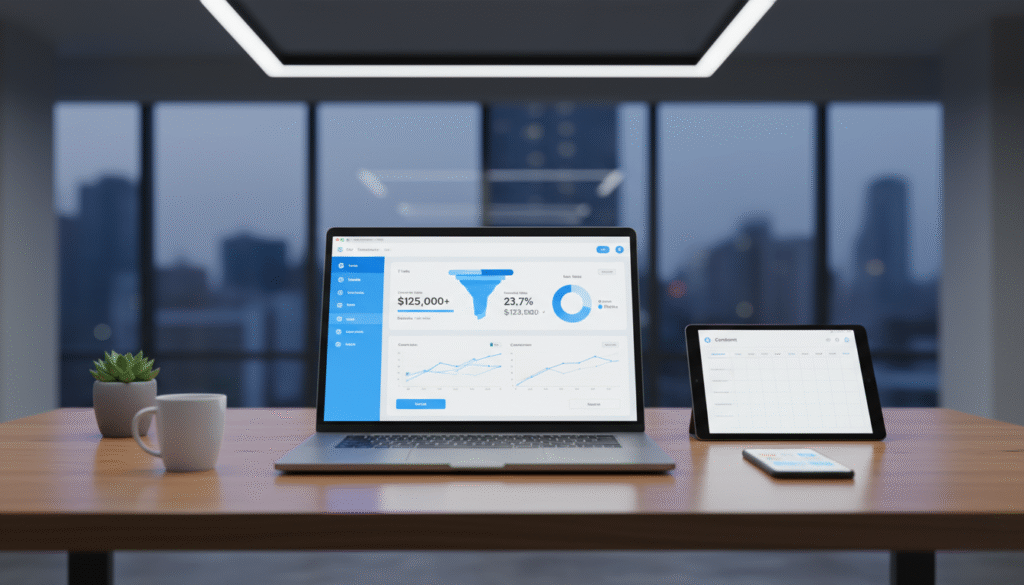
- Analytics & Integrations: ClickFunnels provides funnel and page analytics (visitors, conversion rates, etc.) and integrates with common tools. Out of the box it connects to payment gateways (Stripe, PayPal, etc.), email autoresponders, and webinar platforms. It also plays nicely with Zapier, so you can sync leads to HubSpot, Mailchimp, or hundreds of other apps. In short, it can slot into your existing marketing stack.
Each of these features ties back to driving conversions. For example, pre-built sales funnel templates can guide you from opt-in to thank-you page in minutes, and every template is built with conversion best practices. The course and membership tools let creators deliver content while keeping prospects in the funnel loop. In my experience, having these all integrated saves dozens of tools and maintains consistency – which is why many funnel-centric businesses swear by it.
💼 Everything above sounds great? Click here to test ClickFunnels 2.0 for free and see these features in action.
ClickFunnels Review 2026: Pros and Cons
Pros:
– All-in-One Marketing Platform: ClickFunnels covers funnels, pages, emails, memberships, and even websites in one subscription. This is great for focusing on sales instead of wrangling tech.
– Conversion Focus: Every feature is geared toward increasing sales. Tools like A/B tests, order bumps, upsells/downsells and countdown timers are built in. These have real impact on revenue (as shown by case studies).
– Ease of Use (for Funnels): The drag-and-drop editor and templates make funnel creation intuitive. You don’t need to be a coder to spin up a professional-looking sales page. Many beginners report being able to launch a basic funnel in a day.
– Strong Community and Training: ClickFunnels has a huge user community and plenty of training materials (webinars, courses). If you get stuck, chances are someone has already solved it. This ecosystem gives an edge to committed users.
– Robust Infrastructure: The newer platform promises high reliability (ClickFunnels advertises a 99.9% uptime) and uses smart caching for fast page loads. In my tests, pages did load quickly even under traffic, which is critical because every second delay can cost sales.
Cons:
– Pricey: The plans are expensive compared to many page builders or course platforms. Entry is about $97/month (billed annually) for the basic Launch plan, and scaling up can cost hundreds per month. If you need multiple team seats or advanced features, the cost climbs quickly. Some users feel they’d get more value by using separate specialized tools for email, pages, etc.
– Learning Curve: There’s a lot to learn. Many beginners feel overwhelmed by ClickFunnels’ sheer number of options. The new 2.0 interface is more streamlined, but moving from Classic (or any other system) requires a transition period. Reports suggest it typically takes a couple of weeks of regular use before it clicks. I experienced this myself: initially I felt like I was drinking from a firehose as I learned the workflow. After that, though, the interface felt more logical.
– Occasional Bugs/Glitches: While improved over the original, ClickFunnels 2.0 still has some rough edges. A few times I’ve encountered minor bugs (like elements not saving or odd layout quirks). The company is actively fixing issues, but it’s not as polished as simpler platforms. In extreme cases, slow-loading pages have been reported, which can hurt conversions if not caught.
– Overkill for Simple Sites: If you only need a basic website or one funnel, ClickFunnels might be more than you need. Simpler page builders (like Leadpages or Wix) are cheaper and easier for single-page sites. Similarly, if you only sell courses, a platform like Kajabi (mentioned as a comparison) offers built-in course management with fewer funnel features. But those tools lack ClickFunnels’ full funnel focus.

ClickFunnels Review 2026: Interface and Ease of Use
ClickFunnels 2.0’s interface strikes a balance between power and accessibility. The drag-and-drop editor is visual and intuitive for building pages, and the control panel logically groups funnels, pages, email lists, and products. A huge advantage is global editing: you can set a header or footer once, and it updates across all your pages. This single-change-everywhere feature alone saves hours of work if you run multiple funnels. I also appreciate that you can switch between funnel steps or go to the site manager without logging into a new tool.
That said, the abundance of features means there is a learning curve. New users often have to watch tutorials or spend 10–20 hours learning the ropes. In my experience, it took about a week or two of building funnels regularly before the interface felt second-nature. After that period, however, I found it quite efficient: I could whip up a new funnel, set up products, and start email sequences in a single place. Many marketers report similar experiences – initial frustration giving way to appreciation of the streamlined workflow. Beginners might stumble over the first few automations or misplace a setting, so I recommend using ClickFunnels’ extensive documentation and community forums to speed up learning. Overall, while it’s not as instantly simple as a one-page website builder, ClickFunnels’ interface is well designed for what it does. The 2.0 update has made it cleaner than the old Classic, and most users agree that once you adapt, it lets you move fast and stay organized.
ClickFunnels Review 2026: Pricing and Plans
ClickFunnels 2.0 changed its pricing structure in 2024. Now there are four main tiers, all available monthly or with an annual discount:
- Launch Plan – $97/mo (or ~$81/mo billed annually). Includes unlimited funnels, 1 workspace, 2 team members, up to 10,000 contacts, 50,000 emails/month, 3 courses, and 5 custom domains. This tier covers most basic needs: you get all funnel tools with a reasonable resource allowance.
- Scale Plan – $197/mo (or ~$164/mo annually). Everything in Launch plus 5 workspaces, 5 team members, up to 75,000 contacts, 300,000 emails/month, 6 courses, and advanced features (appointments, conversion boosters, countdown funnels). This plan is aimed at growing businesses or agencies that need more seats and automation.
- Optimize Plan – $297/mo (or ~$248/mo annually). Includes 10 workspaces, 10 team members, up to 150,000 contacts, 750,000 emails/month, 10 courses, affiliate center, and full API access. This is for large funnel volumes and affiliate management.
- Dominate Plan – $5,970/yr (no monthly option). For enterprises: 20 workspaces, 20 team members, 400,000 contacts, 1.2M emails/month, 20 courses, VIP support, SSO, etc. Most businesses won’t need this level, but it’s there for major operations.
Each plan includes a 14-day free trial, and ClickFunnels offers a 30-day money-back guarantee if you’re unsatisfied. Note that all plans include unlimited funnels and visitors (no hidden traffic fees), which is rare. The main differences are seat counts, contact/email limits, and advanced features. In short, ClickFunnels is on the high end of pricing, but the value depends on how much revenue your funnels generate. For many users, the cost pays for itself when funnel improvements double or triple sales, but it can be a stretch for tight budgets.
ClickFunnels Review 2026: Who Should Use It
ClickFunnels is best for entrepreneurs and teams who are serious about selling products or services online through funnels. In my view, it shines for:
- Online Marketers & Course Creators: If you sell digital courses, coaching, or webinars, ClickFunnels gives you everything needed to market and deliver them. You can build the funnel and the membership portal in one place.
- E-commerce & Product Sellers: The advanced cart and upsell tools make it powerful for physical and digital products. Any business using Facebook/Google ads to drive traffic will appreciate the conversion optimization tools.
- Agencies & Consultants: Marketing agencies often use ClickFunnels to build funnels for multiple clients, thanks to workspaces and teams. The unlimited funnels on even the basic plan help a lot – you won’t be forced to upgrade just for volume.
- Affiliates and SMBs: Small businesses that need to maximize every lead will find the feature set compelling. For example, if you run an online boutique or subscription box service, built-in funnels and follow-up sequences can significantly raise lifetime customer value.
On the other hand, ClickFunnels may be more than needed if you only want a simple website or blog. If your focus is purely content and community (and you don’t need complex checkout flows), simpler and cheaper platforms exist. Likewise, Kajabi or Kartra could be considered if your primary need is course delivery or email marketing, respectively. But for most businesses that care deeply about conversions — especially those marketing products via paid ads — ClickFunnels offers unmatched funnel-specific functionality.
ClickFunnels Review 2026: Final Verdict
After years of hands-on use, I can confidently say that ClickFunnels 2.0 remains one of the most powerful sales funnel builders available. It has grown from a simple funnel page tool into a full marketing hub – you can literally run your entire sales engine from within it. The 2.0 version addressed many old pain points (faster load times, global page elements, full site builder), though some kinks still persist. Its biggest strength is undeniable: when used effectively, ClickFunnels drives real ROI by aligning every part of the funnel toward selling.
That said, it is not perfect. The price is steep, and jumping into ClickFunnels has a learning curve. It’s not the right choice for everyone, but for someone serious about scaling an online business, it’s well worth considering. The sheer range of funnel-focused tools is still unmatched. In my experience, even though a competitor might have a catchier landing page editor or cheaper starting price, none have the same blend of conversion-centric features and ecosystem.
Ready to see it in action? You can try ClickFunnels yourself risk-free – they offer a 14-day free trial (and a 30-day money-back guarantee). That means you have over a month to build funnels, test conversions, and see if it boosts your sales. If you’re planning a launch or want to maximize your online revenue, it’s worth putting ClickFunnels to the test. 🚀 Ready to see results? Try ClickFunnels free for 14 days and start building funnels that actually convert.
want to read more about clickfunnels?
Want to read more about Systheme.io? ClickFunnels vs Systeme.io: The Ultimate Funnel Builder Showdown (2026)