What Is a Sales Funnel and Why Every Business Needs One
Imagine running a small business online, doing all the marketing you can, but only getting a trickle of sales. You start asking yourself: what is a sales funnel, and how do I use one? For example, designer Maria attracts many visitors to her portfolio, but most leave without hiring her. She’s frustrated and realizes she needs a clear funnel to guide people from first contact to final purchase. Like Maria, you might ask what is a sales funnel and how it can solve this problem.
What Is a Sales Funnel? (Definition)
Image: Business professional holding a colorful funnel graphic labeled Awareness, Interest, Consideration, Purchase, Loyalty.
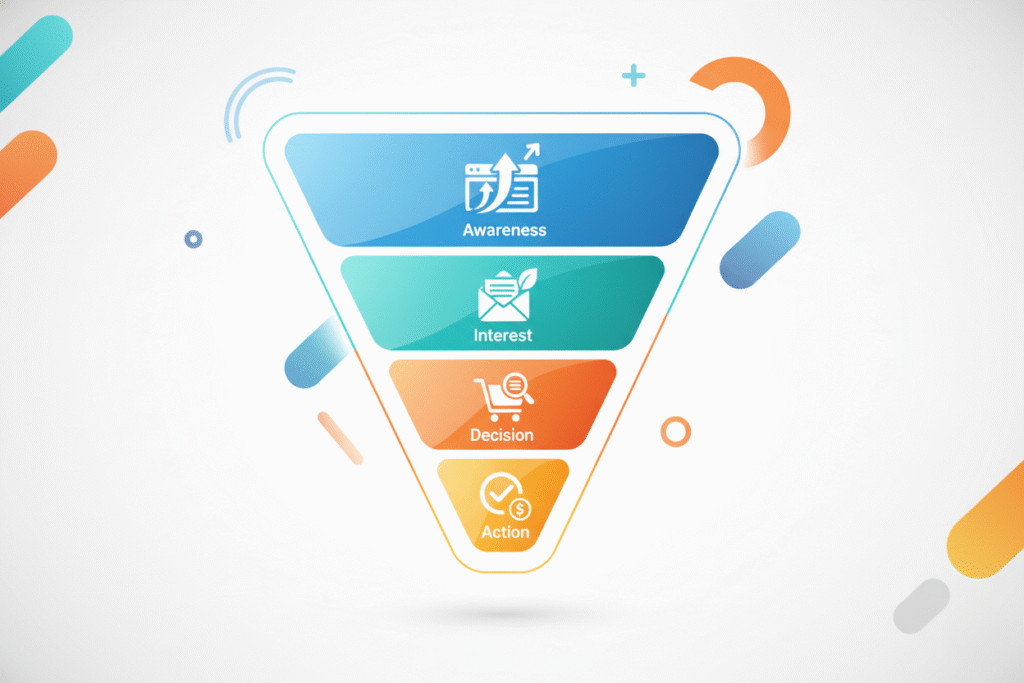
A sales funnel is the step-by-step journey people follow from first hearing about your business to making a purchase. Think of it as an inverted pyramid: many prospects enter at the wide top (becoming aware of you) and a smaller number emerge at the narrow bottom (becoming customers). The main stages are Awareness, Interest, Decision, and Action. A funnel helps you organize marketing: you attract attention at the top, nurture leads in the middle, and drive the final sale at the bottom. In short, a sales funnel means guiding every interested visitor down to a sale, so none are lost along the way. For those still asking what is a sales funnel, it’s simply the plan you create to guide potential customers through each step toward purchase.
By the way, If you want a broader view of the landscape, I’ve also put together a complete 2026 guide to digital tools covering AI, CRM, productivity platforms, automation tools and more.
Stages of a Sales Funnel: Awareness, Interest, Decision, Action
Each stage of the sales funnel guides prospects closer to buying.
Awareness
At the top is awareness. Your goal is to let people know you exist. Use ads, social media, SEO, or content to introduce your brand. Often you offer something free (like an ebook or newsletter) to capture interest. Example: An online store might run an Instagram ad for a free style guide; a coach might offer a free webinar. These actions make prospects aware of your business. Not everyone will become a customer at this stage, but by reaching more people, you increase your chances of getting leads into your funnel.
Interest
Next is interest. Now that people know you, give them valuable information so they start trusting you. Send helpful emails, blog posts, or demos that solve their problems. Example: A newsletter series might deliver useful tips after someone subscribes, or an e-commerce site might send a discount email when a shopper leaves items in their cart. This stage builds a relationship and keeps people engaged. You can also segment leads here (for example, by interest or behavior) and send more relevant content to each segment.
Decision
The decision stage is when leads compare options and consider buying. Make saying “yes” easy. Provide testimonials, demos, or special offers. Example: A software trial user might see a limited-time upgrade discount; a service provider might offer a free consult call. Show social proof or success stories to reassure them. Highlight the benefits and address any objections so prospects feel confident about buying from you.
Action
Finally, action is the purchase. This is when the prospect clicks “Buy Now”, subscribes, or signs a contract. Make the process smooth with clear calls-to-action and easy checkout. Example: After adding a product to their cart, a shopper completes the checkout; or after a demo call, a client signs up for your service. At this point, the sales funnel has done its job: a visitor became a customer. After purchase, it’s smart to engage them further (like offering a referral bonus or welcome series) to encourage repeat business.
So what is a sales funnel? It’s exactly the journey we’ve described: moving people from Awareness, to Interest, to Decision, and finally to Action. Each stage plays a role in guiding them smoothly to buying from you.
Image: Illustration of a multi-layered sales funnel with colored segments. Many business owners ask what is a sales funnel, and this graphic provides a quick visual: a funnel starts broad at awareness and narrows down to sales at the bottom. The layered funnel shows how prospects are filtered through stages. Seeing the funnel visually helps you remember that you start with a broad audience and gradually narrow to your most engaged customers. This is the essence of what a sales funnel is—guiding prospects from curiosity to purchase.
Another powerful advantage of using a sales funnel is the ability to understand why people buy — and why they don’t. Many business owners look at sales as a single moment, but in reality, buying decisions are shaped long before the checkout page. When you track each step of the funnel, you start to see patterns: which content sparks interest, which emails lead to replies, and which objections keep prospects from moving forward. For example, a fitness coach may notice that most leads drop off after reading pricing details, revealing a need to add testimonials or clearer value explanations. An e-commerce brand might discover that visitors who watch a product video convert 40% more than those who don’t, encouraging them to add videos across more product pages. These insights help you refine your messaging, remove friction, and strengthen trust at every stage. When people ask what is a sales funnel in practical terms, this is the real answer: it’s a measurable system that shows you what works, what doesn’t, and where the biggest opportunities for improvement live. The more you analyze and optimize these touchpoints, the more consistent, predictable, and scalable your sales become.

Why Every Business Needs a Sales Funnel
Having a sales funnel brings several key benefits:
- Consistent Leads & Sales: A funnel creates a repeatable process for attracting customers. Instead of random one-off sales, you have a system that fills your pipeline every day. For example, you can run the same ad campaign each week and capture a steady number of new leads.
- Predictability: Once you know your funnel’s conversion rates (e.g. 5% of visitors buy), you can forecast revenue. This makes planning growth much easier. An online store, for instance, can predict how many sales will come from its monthly site visitors, or a coach can estimate how many sign-ups a webinar will generate.
- Automation & Scalability: Funnels can run on autopilot. Use tools to automate emails and follow-ups, and then just focus on driving more traffic. This means you can grow without doubling your workload. For example, a SaaS founder might automate the trial-to-paid email sequence so that more users upgrade with less effort.
- Higher Conversion Rates: By educating and nurturing leads, funnels build trust. Prospects guided through each stage are more likely to buy, increasing your sales. For instance, a small coaching business sees more clients when their webinar sign-ups are guided through an email sequence, because prospects feel more confident before signing up.
- Insight & Improvement: With a funnel, you track exactly what content and steps convert. This data lets you improve weak stages. You can test different emails or landing pages and see what works best. Over time, these optimizations make your funnel stronger.
For example, after Maria added a simple funnel (collecting emails with a free design guide and following up with tips), she started to get client bookings regularly instead of sporadically. She even learned how many emails to send each month to reach her goals. The clear steps meant her prospects knew exactly how to move forward. This predictability and consistency changed her business.
How to Build Your Own Sales Funnel
Image: A business professional writing marketing strategy on a glass whiteboard, illustrating planning and funnel concepts.
Follow these steps to create your funnel:
- Define your audience and goal: Decide who your ideal customer is and what action you want (e.g. product sale, demo booking). Being specific here means you target the right people.
- Create a lead magnet and landing page: Offer something valuable for free (guide, webinar, discount) and build a simple page where people sign up. Keep the page focused on one action to avoid confusion.
- Drive traffic: Use social posts, ads, or SEO to bring people to your landing page. Focus on channels where your audience spends time for the best return.
- Nurture leads: Send a series of helpful emails or content to those who sign up, building trust and interest. Personalize if possible (using names or relevant topics) to increase engagement.
- Make the offer: Present your product or service with a clear call-to-action (e.g. “Buy Now” or “Book a Call”). A strong offer or limited-time deal can create urgency and motivate action.
- Analyze and improve: Monitor how each step performs. If many prospects leave before buying, tweak your messaging or offer. This continuous optimization will boost your funnel’s effectiveness.
Following these steps will give you a clear picture of what is a sales funnel in action for your own business. Even a basic funnel – a sign-up page plus follow-up emails – is better than no plan. As you add more pages or emails, your funnel becomes stronger and drives more sales.

Recommended Tools for Your Funnel
You can simplify funnel-building with these tools:
- ClickFunnels: ClickFunnels is one of the most popular drag-and-drop funnel builders for beginners and small businesses. It includes landing page templates, checkout pages, email automation, and split testing — all in one place. If you want to build your entire funnel without touching code, you can try ClickFunnels here and start with their free trial.
- Systeme.io: Systeme.io is a simple, beginner-friendly all-in-one platform for building funnels, sending email campaigns, creating automations, and even hosting online courses. It also offers a generous free plan, making it ideal for small businesses and new creators. You can get started with Systeme.io for free here.
Both tools let you launch a funnel without needing a developer. They handle hosting pages and managing contacts, so you focus on content and offers. No coding or extra plugins are required – just plug in your content and start capturing leads. These tools can also help with memberships or course pages if you sell those. For those still wondering what is a sales funnel, using a ready-made funnel template from these platforms can save you hours of setup and let you test your ideas quickly.
Conclusion: What Is a Sales Funnel and Where to Go Next
So what is a sales funnel? It’s the roadmap that helps your business attract, engage, and convert customers. Every industry benefits from a funnel: e-commerce stores see more checkouts, coaches get more clients, and SaaS products turn more free users into paying customers.
The next step is action. Start sketching out your funnel stages today: decide on a lead magnet, set up a landing page, and plan your email follow-ups. Use a tool like ClickFunnels or Systeme.io to make it easy. The sooner you launch your funnel, the sooner you’ll start seeing steady leads and sales.
For example, an online store owner can predict revenue from their email list and watch sales grow each month. A coach can turn webinar viewers into booked clients with each email sequence. A SaaS company can systematically convert free trial users into subscribers. With a funnel, every marketing effort has purpose and direction.
Don’t leave your growth to chance. Focus on launching your funnel now; you can optimize it later as you gather real feedback. You’re now ready to see the difference a funnel can make for your growth. Take what you’ve learned and build your sales funnel today – your business will thank you for it.
want to read more about Sales Funnels?
ClickFunnels Review 2026 – Is It Still the Best Sales Funnel Builder?
Systeme.io Review 2026 – A Free Alternative to ClickFunnels?