Why Every Small Business Needs a CRM in 2026: Why Small Businesses Need a CRM
In 2026, the landscape for small businesses has become more complex than ever. With digital channels multiplying and customer expectations rising, even local competition feels global. Many owners find themselves juggling spreadsheets, sticky notes, and myriad apps to keep track of every customer. It can seem overwhelming, and that’s why small business owners often ask “why small businesses need a CRM” in the first place. The answer is revealed every time a lead slips through the cracks or an email goes unanswered: manual systems simply can’t keep pace. That is exactly why small businesses need a CRM – to transform scattered chaos into clear opportunity.
If you want a simple CRM built specifically for small businesses, you can try SalesNexus here — it takes less than a minute to set up.
Traditional methods fall short. Without a unified platform, vital information is scattered across inboxes, notebooks, and outdated spreadsheets. Small teams can’t afford these blind spots in 2026, and that emphasizes why small businesses need a CRM. A CRM centralizes all customer data in one place – making follow-ups automatic, customer history accessible, and team communication smooth. In short, the case for why small businesses need a CRM is stronger than ever in today’s fast-paced market.
By the way, If you want a broader view of the landscape, I’ve also put together a complete 2026 guide to digital tools covering AI, CRM, productivity platforms, automation tools and more.
The Rising Challenges Small Businesses Face Today: Why Small Businesses Need a CRM
For many small organizations, juggling customer details on spreadsheets, notes, and emails creates chaos. Every day there’s a risk of losing important information or overlooking a customer request. This situation makes it clear why small businesses need a CRM: to bring order to chaos. When data is scattered across different channels, teams waste time searching and often make mistakes. It’s easy to miss a sale or repeat a step that’s already been done. These frustrations explain why small businesses need a CRM to keep track of leads and customers in one place.
- Scattered Data and Silos: Many small businesses rely on spreadsheets, notebooks, and multiple apps, creating information silos. Critical details like customer contact info or past orders get scattered. When a team member leaves a note on one list, another might update a different one – leading to confusion and errors. This chaos clearly shows why small businesses need a CRM: without one, data will always be hidden in the wrong place.
- Missed Leads and Opportunities: Without a system to track prospects, new inquiries can slip through the cracks. A lead might send an email that no one follows up on, or a potential customer calls on Monday and isn’t contacted again. These missed opportunities underline why small businesses need a CRM: every unlogged lead is lost revenue. A CRM can automatically record incoming inquiries and remind the team to take action, preventing this common issue.
- Inconsistent Follow-ups: Personal calendars and memory are unreliable. One employee might send a thank-you email; another might forget. If follow-ups are handled inconsistently, customers fall through the cracks and trust erodes. This inconsistency shows exactly why small businesses need a CRM: so no customer is forgotten. A CRM ensures that follow-ups happen on schedule, maintaining a consistent customer experience.
Together, these challenges highlight why small businesses need a CRM. By eliminating scattered silos, capturing all leads, and standardizing follow-ups, a CRM solves these headaches. Small teams that recognize these pain points will quickly see that a CRM is not an optional luxury but a vital tool for organization and growth.
Centralizing Customer Information with CRM Systems: Why Small Businesses Need a CRM
Many small businesses operate on a patchwork of tools: separate email accounts, spreadsheets, mobile contacts, and paper notes. This fragmented approach means no one has the full picture of a customer. It is exactly in this situation that it becomes clear why small businesses need a CRM. A CRM provides a single, unified database for all customer interactions. Instead of digging through documents to find an email or phone call, a quick search in the CRM shows everything. This centralization saves time and eliminates guesswork in daily tasks.
After implementing a CRM, teams immediately notice the difference. No more copying contacts from phone to computer or chasing down information. Because all team members can access the same customer profiles, mistakes due to missing information vanish. This improvement shows why small businesses need a CRM: real-time visibility keeps everyone on the same page. Any new owner asking about CRM will quickly see how it eliminates data silos and streamlines work. Indeed, the efficiency gained simply reinforces why small businesses need a CRM even more clearly.
How Centralization Saves Time: Why Small Businesses Need a CRM
When all customer details are in one system, day-to-day tasks become much faster. For example, when a customer calls with a question, an employee can quickly locate all past orders and notes in seconds. That saves what could have been minutes of digging through email or paper files. This time saving demonstrates why small businesses need a CRM: it eliminates repetitive work. Every hour saved on searching data means more hours serving customers and growing the business. When someone realizes how many hours of work it replaced, they immediately see why small businesses need a CRM.
How It Prevents Lead Loss: Why Small Businesses Need a CRM
In manual systems, new leads often slip away unnoticed. Someone might send an email that no one flags, or a business card might sit unread on a desk. With a CRM, every inquiry is automatically logged and given a status. This means no potential customer vanishes into a shuffle of papers. That is a perfect example of why small businesses need a CRM: to catch every sales opportunity. By preventing leads from being lost, CRM systems directly increase conversion rates and protect revenue. When leads stop disappearing at random, it clearly shows why small businesses need a CRM.
Automating Follow-Ups and Increasing Conversions: Why Small Businesses Need a CRM
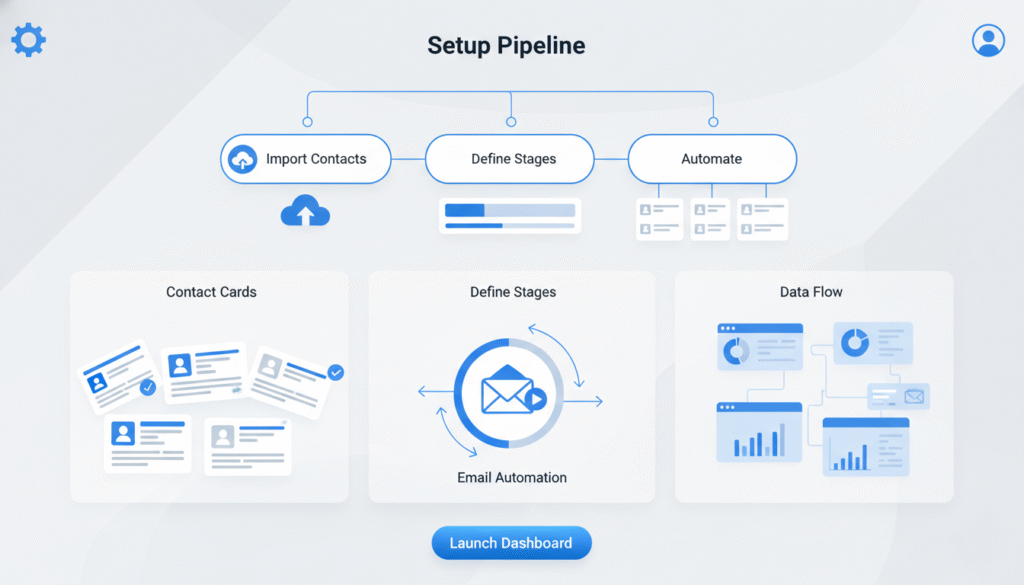
For small teams, following up with prospects and customers manually is a recipe for dropped opportunities. A CRM automates reminders, emails, and tasks so that no one is left to rely on memory. This automation leads to more conversions and a steadier sales flow. In other words, one key explanation for why small businesses need a CRM is the reliability it brings. Instead of hoping employees remember to call back, the CRM schedules the next step automatically. This means leads get more of the personal attention they deserve, leading to more deals closed.
A CRM like SalesNexus gives small teams automation tools that replace manual follow-up work and keep every lead moving forward — try it here.
Why Manual Follow-Ups Fail: Why Small Businesses Need a CRM
Relying on manual follow-ups is unreliable. Employees can forget to send an email or assume someone else will handle it. Even simple tasks get overlooked in a busy day. This is exactly why small businesses need a CRM: because people make mistakes. A CRM removes that margin of error by automatically tracking tasks and deadlines. Instead of relying on memory or scribbled notes, the CRM makes sure every promise is noted. For owners, noticing how many follow-up tasks pile up should immediately answer why small businesses need a CRM.
How CRM Reminder Systems Work: Why Small Businesses Need a CRM
CRM systems can automatically send reminder emails or prompts when it’s time to follow up. For example, after a meeting a CRM can schedule a thank-you email to be sent the next day. It can alert sales reps if a prospect has gone quiet. This automation streamlines consistency. When small business owners see these reminders in action, they quickly understand why small businesses need a CRM: it keeps even simple tasks from falling through the cracks. The system works like a safety net, catching every scheduled follow-up.
Bringing Structure to Sales Pipelines: Why Small Businesses Need a CRM
As a business grows, a clear sales pipeline is crucial. A CRM visualizes each stage of the process – from new lead to closed deal. This structure turns ambiguity into insight. Instead of guesses, owners see exactly where each customer stands. This pipeline clarity explains why small businesses need a CRM: it enables planning and prioritization. With a structured funnel, a small team can focus on deals that are furthest along or stuck. It also means that forecasting and reporting become realistic, which is crucial for growth planning.
Tracking Deals Properly
In a CRM, every deal is logged with the latest status and next action. This means managers know exactly which deals are hot and which need attention. No opportunity is left behind unknowingly. Because data is centralized, anyone on the team can pull up a report to check progress. This level of tracking solves the very problems that make one wonder why small businesses need a CRM. With every deal updated in the system, forecasts become reliable and sales predictions become possible. The simplicity of knowing exactly where each sale stands illustrates precisely why small businesses need a CRM to grow beyond guessing.
Improving Forecasting
Accurate forecasts come from real data. With a CRM, historical sales and current pipeline numbers are at your fingertips, so small businesses can predict cash flow or staffing needs. Without a CRM, forecasting is a shot in the dark. This is a critical reason why small businesses need a CRM: it provides the insights needed to make informed decisions. Business owners using a CRM can look at past trends and make confident plans for the future. In fact, this future outlook underscores exactly why small businesses need a CRM in an uncertain market.

Improving Customer Relationships Through Consistency: Why Small Businesses Need a CRM
Inconsistent service can undermine even great products. A CRM helps keep customer experience consistent by giving every employee the full story of each customer. For instance, if one team member is out sick, another can immediately see all pending issues or promises. This reliability in service is exactly why small businesses need a CRM: consistency builds trust. When responses are quick and accurate, customers feel valued. Each satisfying interaction reinforces why small businesses need a CRM to nurture long-term loyalty.
Personalized Messages
A CRM stores preferences, past purchases, and communication notes for each customer. Armed with this info, small businesses can send personalized offers or follow-ups. For example, sending a birthday discount or reminding a customer about a past favorite product. Personal touches like these increase engagement and sales. This capability highlights one of the clearest answers to the question of why small businesses need a CRM: it makes personalization practical at scale. Without a CRM, personal details would be lost; with a CRM, every customer can be treated like a VIP.
Organized Communication History
Every email, call, or meeting note is recorded in a CRM, creating a full history for each client. If a customer returns after a few months, anyone in the company can see their full story immediately. This avoids embarrassing mistakes like asking a question that was already answered. It also allows employees to reference personal details, like family names or preferences, to make clients feel recognized. It’s these small conveniences that underline why small businesses need a CRM: keeping an organized history means every interaction is richer and more productive.
Real-World Scenarios Showing Why Small Businesses Need a CRM
- Local Plumber (Lifeline Plumbing): A plumber juggles emergency calls and scheduled jobs all day. Without a CRM, it’s easy for a quick call for a clogged drain to overshadow a booked appointment for tomorrow, leading to customer frustration. After missing a job or two, the owner asks for the first time why small businesses need a CRM. The answer comes quickly: so no customer is forgotten and every lead is captured. With a CRM, the plumber can log each job, set reminders to confirm appointments, and follow up after service – preventing any plumbing job from slipping through the cracks.
- Busy Hair Salon (Style Hub): In a bustling salon, stylists depend on appointments coming in at just the right time. If someone forgets to rebook a client or loses a sticky note, a slot remains empty and money is lost. A salon manager might not know why small businesses need a CRM until they look at days with many empty chairs. Once a CRM is in place, reminders for appointments and automated booking links keep the schedule full. This scenario highlights why small businesses need a CRM to maintain a steady flow of clients and revenue.
- Independent Coach (Peak Performance Coaching): An independent life coach fields inquiries via email, social media, and referrals. Without a system to track these leads, some requests go unanswered. Many coaches eventually realize why small businesses need a CRM the hard way – when a promising client disappears. By using a CRM, the coach logs each inquiry and sets follow-up tasks. This ensures every potential client is contacted. The clarity that comes from a CRM shows exactly why small businesses need a CRM: it provides a simple dashboard of leads so none are overlooked.
- Local Retail Startup (Corner Shop Retailers): A small neighborhood store relies on both foot traffic and online inquiries. Without a CRM, tracking which promotion or referral brought a customer in is nearly impossible. The owners may not see why small businesses need a CRM until they realize they are repeating marketing efforts blindly. A CRM helps by capturing source details and purchase history. This example makes it obvious why small businesses need a CRM: it ties each sale to its source and helps small teams make smarter marketing and sales decisions.

Recommended CRM Tools for Small Businesses: Why Small Businesses Need a CRM
Today there are many CRM options designed for small businesses. These tools vary in complexity and cost, but they all illustrate why small businesses need a CRM. For instance, SalesNexus is one example tailored to small teams, offering contact management, task automation, and email tracking in a simple interface. Other popular choices include entry-level plans from well-known providers, often with free starter tiers for small teams. The key is not the brand, but how easily the CRM fits into a busy schedule. For anyone still on the fence, giving a CRM a try will quickly reveal why small businesses need a CRM: the organization and efficiency gains are immediately apparent.
One of the easiest CRMs for small teams to start with is SalesNexus — you can explore it here.
Final Thoughts: Why Small Businesses Need a CRM
In summary, the question of why small businesses need a CRM has been answered repeatedly. Small teams face scattered data, missed leads, and inconsistent service. A CRM solves all of these by centralizing information, automating tasks, and providing a clear pipeline. In modern markets, it is no longer enough to rely on memory and manual tracking. That reality makes it obvious why small businesses need a CRM – it turns chaos into order and helps businesses grow. By adopting a CRM, small owners can make data-driven decisions, plan for the future, and deliver exceptional customer experiences.
For any owner still unsure, each challenge above illustrates why small businesses need a CRM. The benefits pay off quickly in saved time, happier customers, and more deals closed. The journey of a thousand sales begins with a single step – and implementing a CRM is that first step toward a smarter, stronger business in 2026. So if you’re still asking why small businesses need a CRM, let 2026 be the year you find out.
Want to read more about SalesNexus? SalesNexus review